

A Munyamulenge woman displaced from Minembwe to Kamanyola, South Kivu (Photo by: Teddy Mazina)
Report prepared by: Conspiracy Tracker Great Lakes
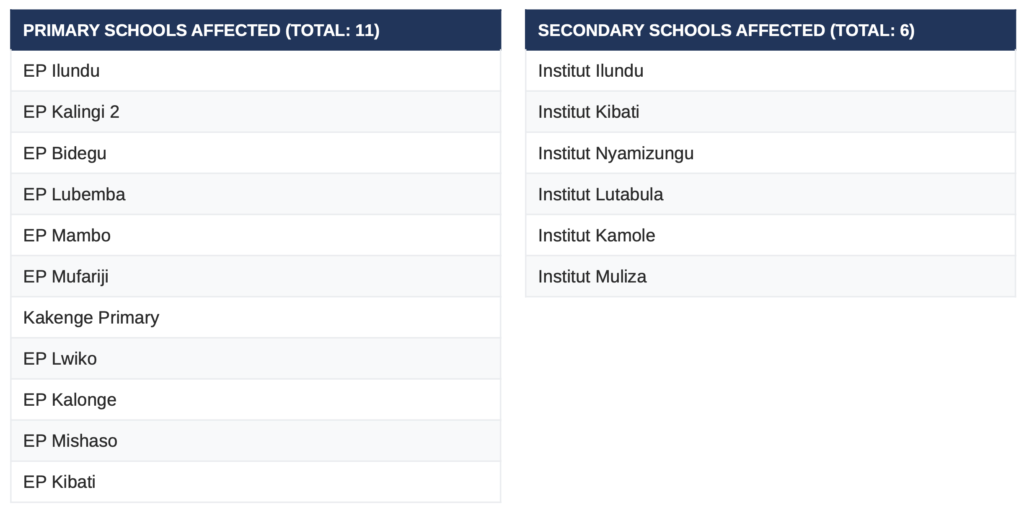
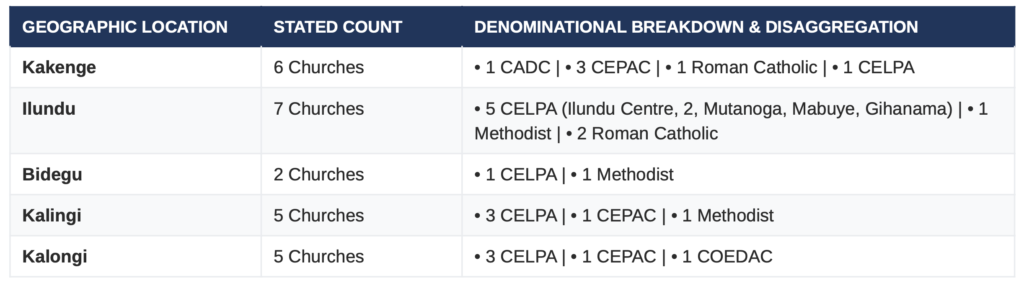
Between February and June 26, 2026, civil society, youth, and community groups in Minembwe documented and shared data indicating that 315 people were killed, 1 hospital and 7 health centers, 17 schools (including 11 primary and 6 secondary), and 26 churches were destroyed, while at least 821 cows and 36 sheep were killed. According to these sources, the vast majority of this destruction was caused by bombing —primarily through drone strikes, Sukhoi aircraft, and long-range artillery and cannon fire—and is attributed to operations carried out by the government of the Democratic Republic of Congo.
This assessment, prepared and issued by Conspiracy Tracker Great Lakes, synthesizes the disaggregated field logs provided by local observers. The systematic targeting of critical infrastructure, educational facilities, places of worship, and livestock represents a catastrophic shift in tactical delivery, severely compromising the localized agrarian economy and basic institutional safety nets of the community.

1. HUMAN CASUALTIES & LETHAL MECHANISMS
During the precise reporting window from February 2026 to June 25, 2026, local documentation verified a total of 315 human fatalities directly connected to active offensive maneuvers. Field observers emphasize that casualties occur on a near-daily basis, leading to severe logistical backlogs in humanitarian recovery; at the time of compilation, multiple bodies remained unburied due to ongoing kinetic actions.
Primary Mechanisms of Death: The mortality figures are overwhelmingly linked to heavy aerial and long-range ballistic vectors rather than light infantry engagements. Local reporting identifies three main mechanisms:
• Unmanned Aerial Vehicles (Drones): Utilized for high-precision targeted munitions on community gatherings and civilian infrastructure.
• Sukhoi (Soukhoi) Fighter Aircraft: Deployed for tactical bombing runs over structural centers.
• Heavy Artillery & Long-Range Cannon Fire: Utilized for indiscriminate area-denial shelling targeting rural perimeters.
Contextual Note on Cumulative Casualties: While this report strictly isolates the 315 explicitly recorded deaths within the February–June 2026 timeframe, comprehensive local text references note that cumulative regional conflict casualties have exceeded 2,000 overall.
2. HEALTHCARE INFRASTRUCTURE DEGRADATION
The medical safety net within Minembwe and its immediate surroundings has faced systematic destruction. The table below lists the primary referral asset alongside the documented local health centers.


* Comment: In alignment with macro field reporting, the assets listed above represent the 1 hospital and 7 health centers confirmed as targeted and destroyed within the reporting window.
3. DESTRUCTION OF EDUCATIONAL INFRASTRUCTURE
A total of 17 academic institutions were systematically disabled or destroyed during the conflict period, completely halting formal education across the primary and secondary tiers.
4. TARGETED RELIGIOUS INFRASTRUCTURE
Religious institutions served as distinct focal points of physical impact. Local records indicate that at least 26 churches were severely affected through explicit bombardment, aggressive ransacking, or localized looting.
5. LIVESTOCK CASUALTIES & ECONOMIC ASSETS
The structural assault in Minembwe includes an unprecedented operational pattern targeting livestock, which constitutes the foundational economy of the resident community.
• Systematic Raiding / Theft: Historical and ongoing records document that more than 500,000 cows have been forcefully raided, presenting an immediate threat to the community’s primary livelihood.
• Aerial Bombardment of Livestock: Field logs detail a tactical phenomenon emerging primarily between late April and May 2026. Government drones have targeted livestock populations in open fields during daylight hours or inside stables at night.

6. ANALYTICAL CONCLUSION
The consolidated documentation details a severe, synchronized impact on human lives, critical infrastructure, and economic capital within the Minembwe region. The high reliance on government-operated unmanned aerial vehicles (drones), heavy artillery, and fighter aircraft accounts for the concentrated structural degradation across medical, educational, and religious assets. The concurrent targeted bombing of vital livestock asserts an acute long-term socio-economic vulnerability for the population.
Reporting Disclaimer: This document is prepared based strictly on field metrics compiled and reported by local civil society, community networks, and youth groups within Minembwe. Figures reflect documented incidents up to June 25, 2026.