
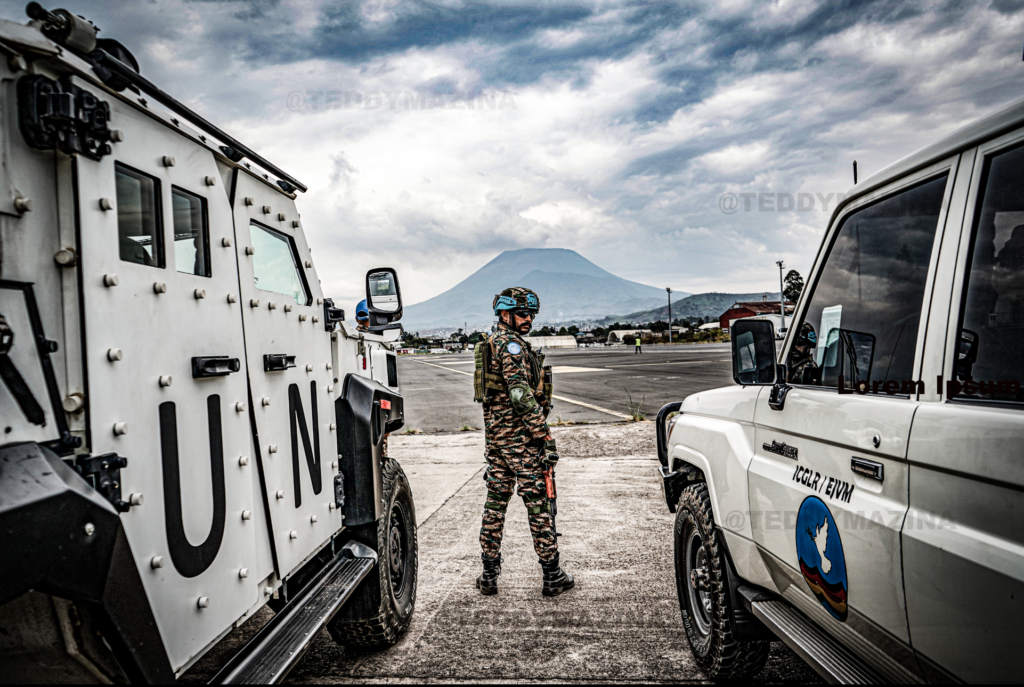
A MONUSCO blue helmet at the Goma airport awaiting the head of MONUSCO, SRSG James Swan, who is visiting AFC/M23-administered Goma, on September 21/22, 2026 (Photo by Teddy Mazina).
By Bojana Coulibaly
Critical Discourse Analysis (CDA) reveals that United Nations Security Council Report S/2026/748 on MONUSCO (covering June to September 2026) is not a neutral, objective operational assessment of conflict dynamics in the eastern Democratic Republic of the Congo (DRC), but rather a calculated institutional narrative engineered to insulate President Félix Tshisekedi’s regime, cast the Alliance Fleuve Congo (AFC/M23) as the singular driver of regional instability, and justify MONUSCO’s $2.13 billion operational appeal.
- Theoretical Framework and Institutional Objectives
Critical Discourse Analysis posits that official institutional texts reproduce and legitimize asymmetric power relations through specific lexical selections, structural omissions, and statistical framing. In Report S/2026/748, the UN Department of Peace Operations utilizes discourse practices that fulfill three primary political objectives: protecting the Kinshasa government from international accountability, delegitimizing AFC/M23 as a political actor, and preserving MONUSCO’s institutional presence.
This institutional survival strategy is reflected in how the report legitimizes state mechanisms. In Paragraphs 1 and 7, the report explicitly welcomes President Tshisekedi’s “National Dialogue for Peace, Cohesion and State Renewal,” validating a political initiative used by the regime to delay political accountability and prolong its retention of power. Concurrently, the document frames AFC/M23’s presence as the root cause of all civilian suffering, validating MONUSCO’s core narrative as an indispensable operational presence in eastern DRC while securing its $2.13 billion humanitarian budget request (Para. 27).
- Linguistic Sanitization and Lexical Asymmetry
The report systematically employs lexical choices that establish a sharp moral asymmetry between Kinshasa’s military coalition and AFC/M23. A primary discursive technique is the sanitization of genocidal and violent non-state entities allied with the Forces Armées de la République Démocratique du Congo (FARDC). Violent non-state actors, specifically the FDLR, Nyatura, and state-backed Wazalendo militias, are systematically rebranded with defensive, benign terminology. In Paragraph 20, combat operations in Masisi and Walikale are described as “clashes between M23 and armed self-defense groups,” while Paragraph 39 categorizes Kinshasa’s coalition forces as “various factions of armed self-defense forces”. This lexical rebrand morally legitimizes their military actions while framing AFC/M23’s operational responses as unprovoked aggression against community defenders.
When detailing atrocities committed by state-aligned actors, the text shifts to passive syntax and hedging qualifiers designed to minimize perceived severity. Paragraph 19 states that “the FDLR also engaged in low levels of forced recruitment, conflict-related sexual violence and kidnapping, among other abuses,” adding that the group was “allegedly been involved in at least 44 human rights abuses affecting 89 victims”. Phrases like “low levels,” “allegedly,” and “at least” introduce discursive uncertainty, downplaying systemic forced recruitment and sexual violence as minor, isolated occurrences while completely masking Kinshasa’s political, logistical, and military integration of the FDLR.
In contrast, allegations directed at AFC/M23 employ graphic narrative anchors placed at the beginning of clauses to maximize psychological impact. Paragraph 20 demonstrates this structural technique: “On June 17, in Masisi territory, at least 60 bodies were reportedly discovered following AFC/M23 operations against FDLR and Nyatura elements”. Placing “at least 60 bodies” at the front of the sentence anchors an immediate graphic image in the reader’s mind, whereas the subsequent qualifier “reportedly” is discursively subordinated and psychologically dismissed. Defensive military engagements against FDLR combatants are thereby transformed into presumed civilian massacres.
- Visual, Statistical, and Methodological Distortion
Beyond textual rhetoric, Report S/2026/748 uses visual and statistical manipulation to convert biased reporting into institutional metrics. In Paragraph 24, the UN declares that “AFC/M23 remained the largest single perpetrator, responsible for 489 human rights abuses affecting 1,279 victims,” a claim visually reinforced in Figure III, where AFC/M23 is depicted with a column nearly three times taller than any other group.
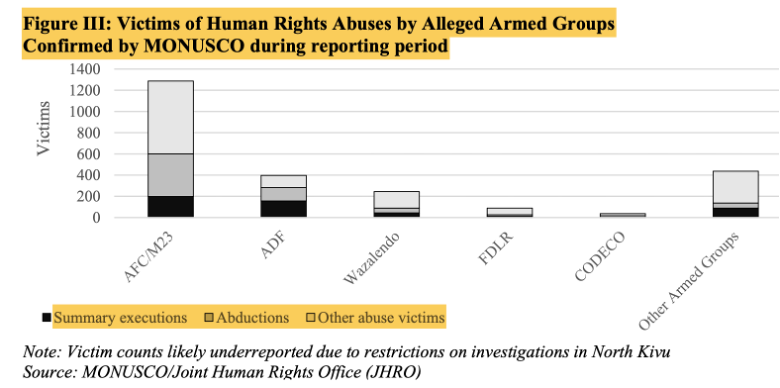
Graph III excerpted from UN Security Council Report S/2026/748 on MONUSCO
Deconstructing Figure III reveals severe categorical distortion. The graph inflates AFC/M23’s bar by bundling over 600 undefined “other abuse victims,” while strategically fragmenting Kinshasa’s state coalition into separate small entities, specifically the FARDC, National Police (PNC), Wazalendo, and FDLR. When these state-aligned actors are aggregated, their combined human rights violations match or exceed those attributed to AFC/M23.
A similar visual distortion occurs in Figure I (Reported killings of civilians in Ituri and North Kivu). Although Paragraph 15 explicitly acknowledges that the Allied Democratic Forces (ADF) killed more civilians than M23 during the reporting period (214 versus 170 fatalities), Figure I presents massive black bars representing total male fatalities in North Kivu. Readers visually assign overall regional deaths to AFC/M23, despite the fact that a part of North Kivu, as well as Ituri, are under Kinshasa government control, thus ignoring that the totals encompass deaths caused by FARDC artillery, ADF massacres, and militia violence.
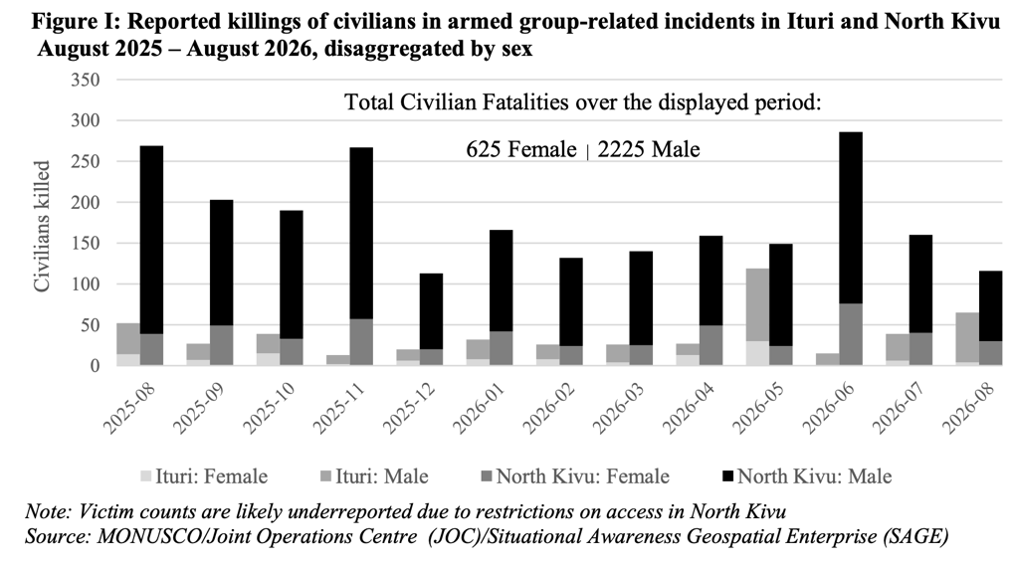
Graph I excerpted from UN Security Council Report S/2026/748 on MONUSCO
Methodologically, the text applies asymmetric standards of evidence. Speculative third-party claims against AFC/M23 containing hedges (“allegedly,” “reportedly”) are converted into statistical figures in graphs. Additionally, state atrocities are sanitized or obscured. In Paragraph 21, FARDC combat drone strikes launched into populated civilian centers are diffusely attributed to generic “clashes between State and non-State actors,” granting operational impunity to the regime. Furthermore, Figure II (Territorial Control Map) classifies AFC/M23 as “AFC/M23-ARC and Affiliates” alongside terrorist organizations like the ADF and CODECO, denying its political identity and administrative role as a de facto authority in eastern Congo.
- Reversal of Responsibility and the “Access Restriction” Strategy
To insulate Kinshasa and preserve MONUSCO’s institutional role, the report systematically reverses conflict responsibility. In Paragraphs 39, 47, and 48, the Secretary-General attributes regional insecurity to “persistent clashes between the FARDC and M23,” creating a bilateral symmetry that conceals Kinshasa’s military offensives and refusal to implement regional peace agreements. Paragraph 40 reduces political stalls in the Doha and Washington processes to “mutual accusations of ceasefire violations,” protecting Kinshasa from being identified as a peace-spoiler. Additionally, Paragraph 31 highlights MONUSCO local projects that “benefitted 5,683 people” to encourage FDLR disengagement, illustrating how the UN subsidizes the FDLR’s local presence rather than executing its mandatory repatriation to Rwanda.
Finally, the report weaponizes accusations of “access restrictions” as a calculated campaign of pre-emptive cover and administrative harassment. Embedded in Footnote 1, Paragraphs 23 and 44, and disclaimers beneath Figures I and III, recurring notes claim that data is underreported due to AFC/M23 movement limitations. Saturation-broadcasting these claims constructs an automatic defense: any methodological flaws, reporting failures, or missing field verifications are pre-emptively blamed on AFC/M23.
Conclusion
Through lexical sanitization, visual data distortion, methodological hedging, and the strategic attribution of conflict guilt, UN Security Council Report S/2026/748 demonstrates how international peacebuilding discourse can be weaponized to sustain a state regime. By reducing complex political dynamics to a singular narrative of AFC/M23 aggression, MONUSCO whitewashes President Félix Tshisekedi’s government, masks state-sponsored violence, and secures its $2.13 billion institutional mandate at the expense of factual reporting and genuine peace process neutrality.